

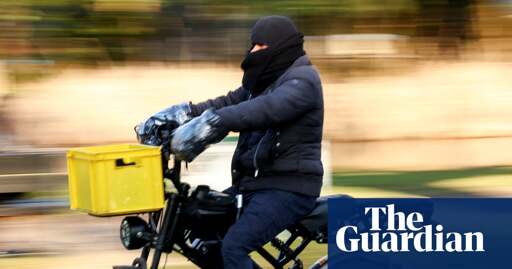
The safety organisation VeiligheidNL estimates that 5,000 fatbike riders are treated in A&E [ i.e Accident & Emergency] departments each year, on the basis of a recent sample of hospitals. “And we also see that especially these young people aged from 12 to 15 have the most accidents,” said the spokesperson Tom de Beus.
Now Amsterdam’s head of transport, Melanie van der Horst, has said “unorthodox measures” are needed and has announced that she will ban these heavy electric bikes from city parks, starting in the Vondelpark. Like the city of Enschede, which is also drawing up a city centre ban, she is acting on a stream of requests “begging me to ban the fatbikes”.
That was sadly exactly what I was expecting from the electric motorization of bicycles. It is a history that has repeated itself many times in the last 70 or 80 years since the first combustion engine mopeds.
The fact is that the human-powered bike is at a sweet spot of efficiency and safety. Once you go faster, you need a helmet, a heavier frame, wider tyres, better brakes, wider lanes, protective clothing, protection against cold, a heavier motor for propelling all the extra weight, and so on. The energy input from you the human dwindles.
It is not any more a bicycle.
You need a helmet on purely muscle-powered bicycles, too. A helmet saved both mine and my father’s life in accidents that would not had happened were we not riding bikes that moment.
A majority of bicycle accident fatalities could have been prevented with helmets.
Wear helmets. There are cool models, too, don’t try that excuse.
The annoying part is having to carry the helmet around with you when bike is parked.
Oh man I got a concussion while wearing a bike helmet I probably would have died if I wasnt wearing it. And we were just kids makings jumps in the driveway…
I vaguelly remember a study in Denmark (which has roughly 50/50 of people cycling with and without helmets) that showed that cyclists who wear helmets were more likely to have serious accidents than those who did not, though by a small percentage.
There are several factors that are believed to be behind such an unexpected statistic:
Anyways, the point being that at the kind of speed and the environment that people cycle in when just commuting in a city, bicyle helmets can actually make it slightly more dangerous.
Mind you, this doesn’t at all mean that in different situations - such as mountain biking or speed cycling - helmets aren’t a must.
In places like The Netherlands pretty much nobody uses a helmet when just cycling in the city.
I would really like to see that study. Because I have studies showing the opposite.
Here is an article (in German, sorry) summarizing and contextualising several studies. One showed that wearing a helmet resulted in car drivers keeping five centimetres less distance when overtaking the cyclist, but that study’s method was flawed and a study conducted in Berlin with better equipment and better method (bigger sample size, different routes, women being actually test subjects and not just represented by a guy with a wig, etc) that showed helmet wearing bicyclists being overtaken with more distance.
Here (again German, sorry) is a research report comparing 543 accidents with injured bicyclists in University Hospitals of Munich and Münster and 117 accudent fatality from a database. From the 117 fatalities, 50% died of traumatic brain injury and six wore a helmet. Furthermore, from those injured (not the 117 fatalities) and with traumatic brain injury, none wore helmets.
Here (this time in english) is a meta analysis of studies about the safety of wearing helmets when cycling, concluding the discussed studies show a benefit for safety when wearing a helmet while cycling (too much for.me to summarize).
Sadly I read about this over a decade ago and don’t have a link for it anymore.
I looked around and all I could find were studies pointing out that helmets protect against head injury, which was never in dispute and you yourself linked studies for that - my the point was not about helmets reducing head injuries (though the whole rotational vs linear collisions thing means good helmet design is important) but about how as per risk compensation theory if there is an overal increase in risk due to increased perception of safety it might offset the increased in protection from helmets since helmets only protect the head.
Also found lots of things about how mandatory helmet use for cyclists in overall causes more deaths (for example and another example) because it reduces the number of people who take up cycling and the overall negative health outcomes of fewer people cycling add up to to higher mortality that the increased risk of head injury from cycling without a helmet given the low baseline risk of cycling in general.
Here’s a pretty good summary from the views in the EU.
Well, first, you did try to make points about brain injuries caused by wearing helmets. Now you claim you never argued about that, so what is it?
Second, it is IMHO not quite intelligent to make an argument about head protection not protectng other body parts. That’s like saying a stab protection vest is useless because you can get shot in the head.
Third, the first article I linked talks about a systematic comparative analysis of 23 studies examining risk homeostasis hypothesis, of which 18 could not confirm the hypothesis, three showing inconclusive results and only two being arguments for the hypothesis, the analysis concluding there is little to no evidence for bicycle helmets leading to riskier behavior.
I know the studies about mandatory helmet rules (something I actually never talked about), I find people’s behavior in this case utterly incomprehensible and stupid, but again, it’s not something I argued for. It just shows me we need to encourage helmet use in different ways. Mandatory for children maybe so that they get used to it, normalizing and encouraging wearing helmets by advertisements etc. IDK, but such efforts can be quite successful if funded and supportes sufficiently.
Ovoid shapes will cause rotational forces on perpendicular impacts, whilst spherical shapes do not. This is just Maths.
Notice how motorcycle helmets are actually spherical.
In my experience the traditional bicycle helmets are half ovoids.
That said I drilled down to the comparative analisys linked from the study you indicated and it basically concludes that people who are more fearful tend to wear helmets when cycling, so the reverse causality relationship of the risk compensation theory (which would be that a person that starts wearing a helmet when cycling becomes more risk taking).
So you make a good point that advising people to wear helmets is not a bad idea.
IMHO, as long as it doesn’t turn people away from a more compreensive risk reduction form of cycling (which is how I personally tackled changing from cycling in The Netherlands to cycling in London, which at the time had much worse cycling infrastructure and were motorists weren’t used to cyclists when I started doing it - by having quite a lot of tricks to keep me safe from the innatention and error of not just motorists but also pedestrians, most of which were not at all needed in The Netherlands were other road users always expect cyclists to be around), it’s fine.
As for mandatory cycling helmets, I’m against it because it severely lowers the uptake of cycling which ultimatelly is worse for people because of worse health outcomes. Also my experience cycling in London during the period were it went from quite atypical to more normalized, is that more cyclists around results in more motorists and pedestrians being naturally aware of and careful towards cyclists (an effect I also noticed from the other side in myself as both a motorist and a pedestrian when I moved from a country with no cycling culture to The Netherlands and got used to lots of cyclists around) which in turn makes cycling safer for everybody - in other words, more cycling adoption makes cycling safer. This seems to be aligned with the most common position in The Netherlands as per my last link:
Bruh, it’s not that deep. Statistics show that wearing a helmet reduces chances to severe head and brain injuries.
I don’t care since I am not discussing helmet mandates.
As for the rest, obviously it’s better to prevent accidents in the first place and obviously we need to reduce the number of cars on our streets for multiple reasons. But that’s all policy while wearing a helmet is a cheap and easy way to protect yourself against unavoidable accidents and avoidable accidents while waiting and advocating for policy change.
Common bicycle helmet
Common motorcycle helmet
Are you really telling me that in the horizontal axis the first doesn’t have a far bigger ratio of major-axis to minor-axis than the second?
Never disputed. After all a hat too will “reduce chances to severe head and brain injuries”, though by a tiny amount.
The point was always about how much and if in the typical conditions of city cycling it is enough to offset possible negative effects such as increase risk taking and less careful behavior from drivers around cyclists who are better protected.
It’s about aggregated effects rather than this one specific thing you focused on to the exclusion of everything else. If you focus on one thing alone then “always wear a hat when you cycle” would count as a safety recommendation for cyclists.
Mind you from our discussions I did shift my position to think it’s a good idea in overall to recommend people to wear a helmet when cycling (mainly because of the study you linked that reviewed various papers and found too little indication of a risk compensation effect), though not on mandatory helmet wearing because there the broader implications - as shown by the experience of Australia - are that all in all it causes more deaths because of the indirect effect of people cycling less hence dying in greater numbers because of the higher mortality for people who don’t regularly exercise. There’s also the point I quoted from the Dutch that in terms of policy aiming for second prevention (such as cyclist protection equipment) negatively impacts the investment in primary prevention (i.e. a safer cycling environment).
Helmet studies typically have a bias for or against from the start. The reality is wearing a helmet is always safer, and would save lives of pedestrians and car drivers. However, making cycling as easy as walking means no helmet laws. In Netherlands, helmeted riders have more injuries because they tend to be the riders on expensive road race bikes going considerably faster in car traffic.
You writting one after the other just makes clear you’re hugely biased in this as you basically put forward an absolute statement of yours “wearing a helmet is always safe” as objective truth whilst studies “typically are biased” or in other words, you know better than studies.
Definitelly agree that using numbers from injuries of cyclists with helmets in The Netherlands without any further considerations yields biased results for the reasons you described. It’s not by chance that I did not quote such figures at all and in fact explicitly said from the start that people doing things like speed cycling and mountain biking should wear a helmet.
No idea were you pulled that specific argument you decided to counter in a response to my posts.
Specifically for The Netherlands and from the last link in my previous post, the only thing about them is the general belief there that “Promoting the use of bicycle helmets runs counter to present government policies that are aimed at the primary prevention of crashes (as opposed to secondary prevention) and at stimulating the use of the bicycle as a general health measure” which is really about not having mandatory helmet laws because it reduces cycling in general and how it’s more important to push for safe cycling conditions (such as good cycle paths) than for cyclists wearing protection, all of which makes sense.
Personally I think that wearing a helmet or not should be down to each cyclist and should take in account the conditions they are cycling under, always remembering that wearing a helmet is not a silver bullet. My own experience of cycling in different countries (The Netherlands, England, Germany, Portugal) and different conditions is that the level of risk can be very different sometimes even from city to city, making helmet use more or less important relative to other things.
Again and above all, always keep in mind that wearing a helmet is not going to make you totally or even mostly safe, if only to avoid the increase risk taking due to a sense of increase safety exceeding the actual amount of increased safety from a helmet - as per risk compensation theory - which ultimatelly can make you less safe.
In my view your whole “wearing a helmet is always safer” absolutist posture is a needlessly dangerous mindset to have - it’s far better to have a far more general approach to cycling safety in city traffic (which is basically what I went with when I moved from cycling in the far safer Dutch conditions to cycling in London, meaning that I ran around with all sorts of risk mitigation practices not just towards motorists on the road but even towards pedestrians in the sidewalk that were even adjusted depending in the area of London I was in) that thinking that just a helmet will make you safe.
No we don’t need helmets. Cars must be kicked out of the bicycle’s areas instead. Fuck that carbrained propaganda.
This reads like you fell on your head without wearing a helmet a few times too often.
Yes, right.
But: A bike helmet won’t help you much if you have a collision at 50 km/h. If you go at moped / light motorcycle speed, you need a motorcycle helmet, too.
Yeah, obviously you need different helmets for different speeds. But the comment I responded to was worded like you wouldn’t need a helmet on bicycles at all.
In principle, this is correct. But the need for a helmet increases massively with speed.
Consider the end speed of free fall when falling a certain height - or the inverse, height in meters versus speed in kilometer per hour. It is:
Would you jump from ten meters height into a concrete surface? Few people would, because it is almost certain that you die. But the frame pillar of a car is equally hard as such a surface.
Another data point: In the center of Copenhagen, not so many people use a helmet, but the speed is typically between 10 and 15 km/h - so many bikes there ! - and the number of serious accidents is very low. The contrary is the case for Germany.
And just to make a point: Using a helmet is always safer.
So? Nobody is arguing about this but you. Again, my point is not about speeds or certain types of helmets. I just said you should wear a helmrt on bikes FFS!
most ebikes already go slower, or on par at max speed with an amateur/relatively fit cyclist. roughly 25 to 30kmph.
going after fat tire bikes specifically doesnt really make sense considering they offer more traction for stopping power. if they legally limit the speed it should be on par with elite level cyclists at most. which is about 50 to 60kmph. depending on the area. nobody wants to wipe out and hurt themselves or somebody else.
this is a way for them to add tickets and licensing for people who wish to circumvent owning a vehicle or taking public transit. which the government and corporations directly benefit from financially.
i just dont see the point besides fear mongering in a place where virtuallly everyone has a bike, and cycling accidents are less lethal than vehicular ones. it just seems like an unfair represention of statistics to prop up a bottom line that only serves to extract wealth from the poor, less well off, environementally or financially concious.
if parents dont want their kids to take those risks, then dont buy them an ebike. buy them a regular one, or tell them to take public tranist if they cant offer it themselves.
they always use children as a way to shoe in control with fear tactics.
as an bike/ebike rider. i have a bike that can go about 45kmph and never go over 25 personally, as that feels like a safe speed in my city with the infrastructure and crossings that we have. every incident that has happened to me has come from vehicles doing illegal turns, crossings, or not looking where traffic is coming from before pulling out into the street.
if anything they should focus on getting more people to ride bikes/ebikes, and offering safety courses for those who wish to own ebikes. free of charge.
if they want to regulate them, regulate braking power vs speed potential. and helmets. and create separated concrete barrier bike lanes with covers for weather and wind to avoid ice buildup and snow. fat tire bikes are nearly a necessity for cyclists in colder climate.
They are talking about banning fat “bikes” not fat tire bikes. They are basically electric motorcycles disguised as an e-bike.
Like this one:

There is already regulation and they should be speed limited. But these bikes are designed to unlock the limit very easily.
These are fucking motorcycles.